Friday, June 10, 2011

Cerastoderma lamarcki in the Caspian Sea


Phylum: Mollusca
Class: Bivalvia
Order: Veneroida
Family: Cardiidae
Genus: Cerastoderma lamarcki
Synonyms: Cerastoderma lamarcki

Photographer: M. Sepehr
Location: Caspian Sea - Iran -mazandaran - tonekabon


Reference
http://animaldiversity.ummz.umich.edu/site/index.html

Caspian Sea

The Caspian Sea is the biggest enclosed body of water on Earth, having an even larger area than that of the American Great Lakes or that of Lake Victoria in East Africa. It is situated where the South-Eastern Europe meets the Asian continent, between latitudes 47.07’N and 36.33N and longitudes 45.43 E and 54.20E. It is approximately 1,030 km long and its width ranges from 435 km to a minimum of 196 km. It has no connection to the world’s oceans and its surface level at the moment is around –26.5 m below MSL. At this level, its total coastline is some 7,000 km in length and its surface area is 386,400 km2. The water volume of the lake is about 78,700 km3. The water of the Caspian Sea is slightly saline; if we compare the Caspian water with oceanic water, it contains 3 times less salt.

Photographer: M. Sepehr
Location: Caspian Sea - Iran -mazandaran - tonekabon


Reference
http://www.caspianenvironment.org

Monday, May 30, 2011

Corbicula fluminalis in the Caspian Sea


Phylum: Mollusca
Class: Bivalvia
Order: Veneroida
Family: Corbiculidae
Genus: Corbicula fluminalis
Synonyms: Corbicula fluminalis

Photographer: M. Sepehr
Location: Caspian Sea - Iran -mazandaran - tonekabon


Reference
http://animaldiversity.ummz.umich.edu/site/index.html


Saturday, May 28, 2011

What Is Environmental Sensitivity Index (ESI) Maps?


ESI maps provide a concise summary of coastal resources that are at risk if an oil spill occurs nearby. Examples of at-risk resources include biological resources (such as birds and shellfish beds), sensitive shorelines (such as marshes and tidal flats), and human-use resources (such as public beaches and parks). 
 
When an oil spill occurs, ESI maps can help responders meet one of the main response objectives: reducing the environmental consequences of the spill and the cleanup efforts. Additionally, ESI maps can be used by planners--before a spill happens--to identify vulnerable locations, establish protection priorities, and identify cleanup strategies.


Shorelines on ESI maps are color-coded by sensitivity to oil. Symbols mark localized areas for biological and human-use resources.
 
Reference

Tuesday, May 17, 2011

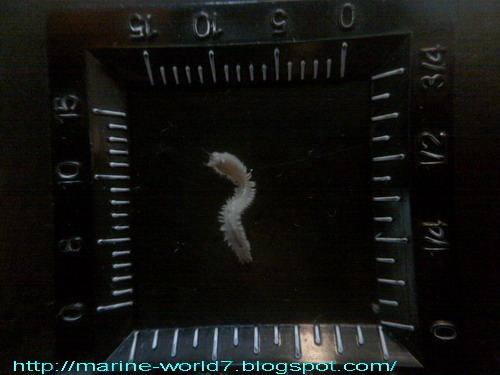
Nereis diversicolor in the Caspian Sea

Phylum: Annelida
Class: Polychaeta
Order: Aciculata
Family: Nereididae
Genus: Nereis diversicolor
Synonyms: Nereis

Photographer: M. Sepehr
Location: Caspian Sea - Iran -mazandaran - tonekabon


Reference
http://animaldiversity.ummz.umich.edu/site/index.html


Tuesday, April 19, 2011

Palaemon adaspersus in the Caspian Sea

Phylum: Arthropoda
Class: Malacostraca
Order: Decapoda
Family: Palaemonidae
Genus: Palaemon 
Synonyms: Palaemon adaspersus

Photographer: M. Sepehr
Location: Caspian Sea - Iran -mazandaran - tonekabon

http://i54.tinypic.com/2ywbbig.jpg


http://i53.tinypic.com/2ivn30m.jpg


http://i53.tinypic.com/2vi58n4.jpg


http://i53.tinypic.com/v6rtxi.jpg


Reference
http://animaldiversity.ummz.umich.edu/site/index.html

Tuesday, April 12, 2011

Harris mud crab in the Caspian Sea


Phylum: Arthropoda
Class: Malacostraca
Order: Decapoda
Family: Xanthidae
Genus: Rhithropanopeus harrisii
Synonyms: Harris mud crab


Photographer: M. Sepehr
Location: Caspian Sea - Iran -mazandaran - tonekabon

http://i53.tinypic.com/25g9r8z.jpg


http://i52.tinypic.com/24cv7lc.jpg


http://i53.tinypic.com/2reiflx.jpg


http://i53.tinypic.com/xe1s8h.jpg


\


Reference
http://animaldiversity.ummz.umich.edu/site/index.html